Posts

Showing posts with the label czap

Microfossil of the Month: Fragile phytoliths
Image
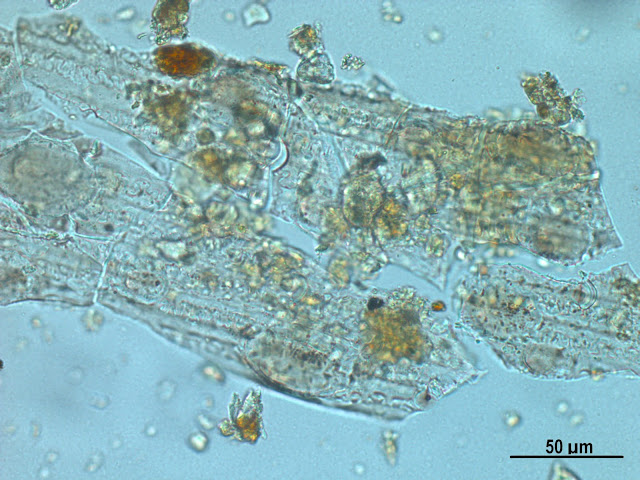
I promise brand new images will be coming soon, but for now here is a micrograph from my old files, this time from my work with the Central Zagros Archaeological Project back in 2010, and is from ashy deposits in an external area at the Neolithic site of Sheik e Abad in Iran. This is a great example of a conjoined phytolith that is not particularly well silicified and/or has suffered erosion. The pattern of the cells is not very distinct, and quite 'faint', though you can just about make out the wave pattern of the long cells in places. For comparison, see this example of well-silicifed wheat phytoliths from Catalhoyuk, and this reference specimen of Setaria italica , both of which have very distinctive and well defined cell morphologies. The reason I chose this micrograph is that it is a very good example of how fragile phytoliths are. Despite being composed of silica, which is pretty resistant to decay, phytoliths are physically quite fragile. Think of it like glass - it i...
Microfossil of the Month: Jigsaw phytoliths

Image
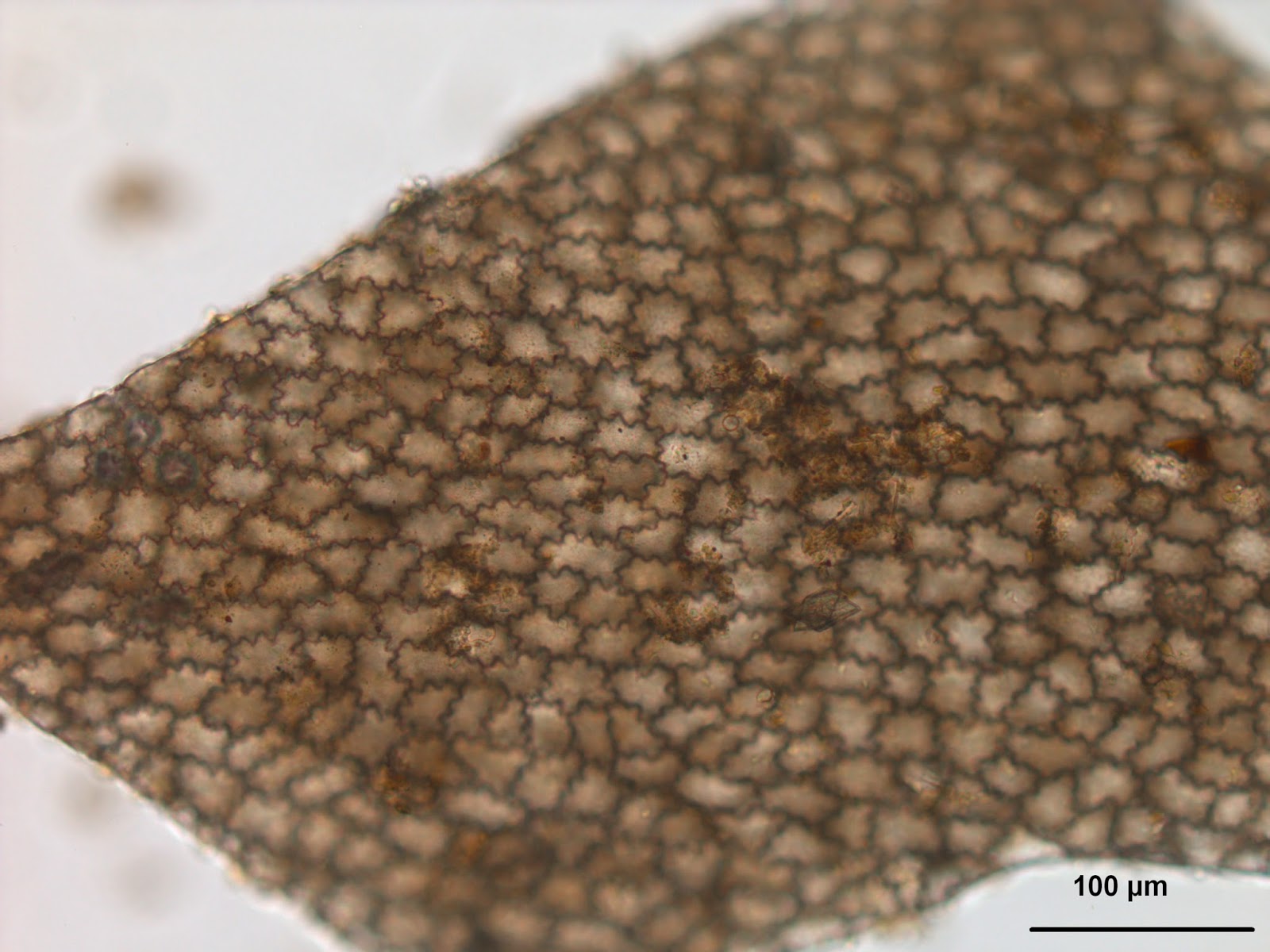
This month's microfossil is a 'jigsaw' phytolith, or rather phytoliths, as it is actually a tissue fragment consisting of multiple conjoined silicified cells. These jigsaw types are associated with the epidermis of woody dicotyledonous plants, though they are also found in herbaceous plants. The two images show the same phytolith in two different focal planes. The uppermost image being the upper epidermis, and the lowermost image showing the underlying layer of 'regular' shaped cells, or the palisade mesophyll layer. The sample this was extracted from is from Sheik e-Abad in Iran, an early pre-pottery Neolithic site, though in terms of food, the plant remains suggest the people were relying to a large extent on non-domestic resources. What makes this sample particularly interesting is the context, within a layer of dark grey calcitic ash, as identified through thin section micromorphology. Dicot phytoliths account for 10% of whole assemblage, which is a lot conside...

Microfossil of the Month: Awn phytoliths

Image
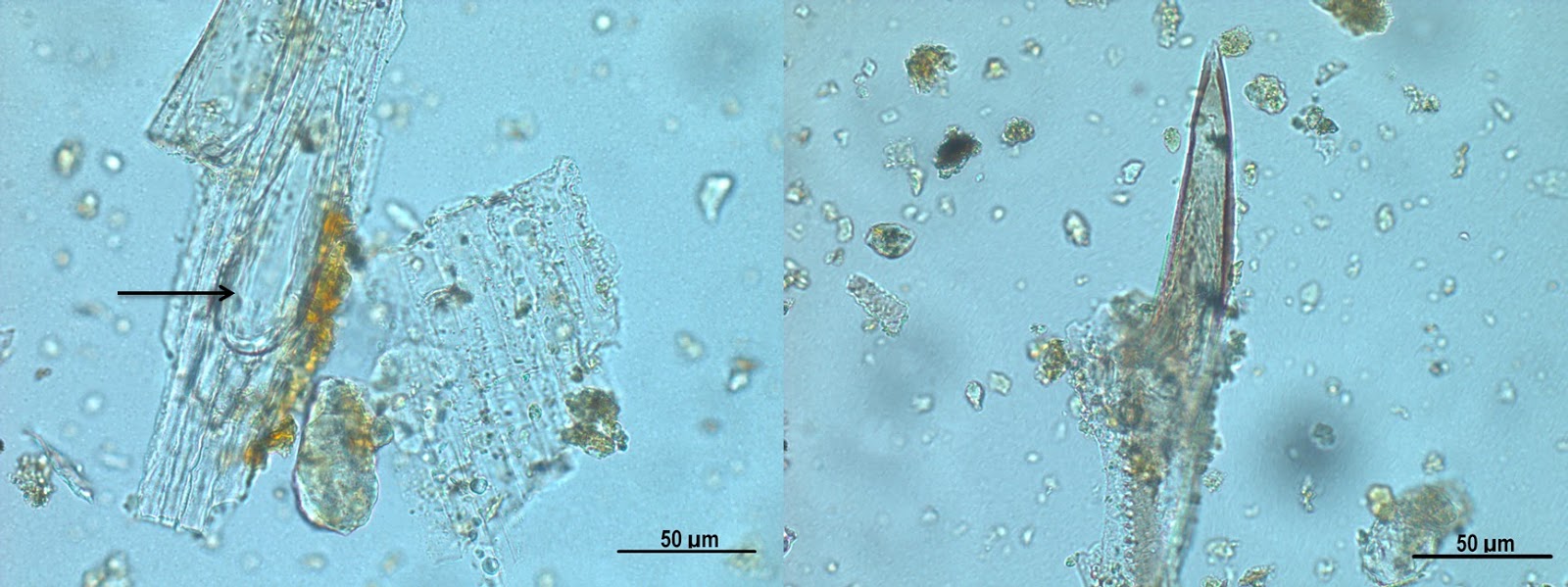
These micrographs show grass awn phytoliths, on the left the spiky hair part is still attached to the rest of the awn, the one on the right shows a hair that has become detached. Awns are hair or bristle type structure which are particularly common on grasses. In some species, such as emmer wheat, the awns contribute to seed dispersal, by hooking into the soil. Changes in humidity cause the awns to expand and contract, acting like a ratchet to propel the seed into the ground. Not to be confused with trichomes, which are another 'hair-like' structure, but a much finer growth of hairs on the surface of the epidermis, and can also produce distinctive phytoliths. Both of these examples are from the same sample, extracted from ashy deposits in an external area at Sheik-e Abad, an early pre-pottery Neolithic site in Iran. The site was excavated as part of the Central Zagros Archaeological Project . I worked there for 2 months after submitting my PhD in 2008, one of the most fascinat...

Ethnoarchaeology - animal dung in Iraqi Kurdistan

Image
I've just been notified of the publication of this great new paper via Google Scholar citations, as it cites my paper on lipid analysis of coprolites . That's not the only reason I'm writing about it mind you - anything dung related gets my attention, and this is one of the first papers to come out of the Ce ntral Zagros Archaeological Project , which I was involved with a number of years ago. The CZAP project aims to understand the origin and process of animal domestication and agriculture in the Central Zagros region of Iran and Iraq, and the team have also conducted ethnographic studies in modern villages in the area, in order to help interpret the archaeology. This paper by Elliot et al reports on a mix of ethnographic studies and scientific analysis of modern dung and plants. The authors look at the dung spherulites in modern samples of sheep, goat and cows - those little spherical particles that form in the guts of animals . Despite being used frequently to support t...

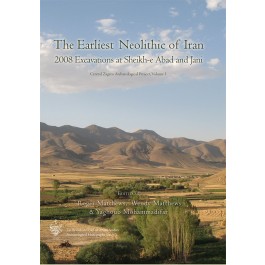
The Earliest Neolithic of Iran

Image
The long awaited CZAP volume is out at the end of this month, published by Oxbow . This is the first project monograph from the Central Zagros Archaeological Project (CZAP) , and includes 2 (and a half) chapters co-authored by myself, on the biomolecular analysis of coprolites (oh that old chestnut!) and phytolith analysis. Dr Wendy Matthews coordinated the micromorphology analysis and directed sampling, and in the monograph she provides an excellent integration of micromorphology, phytolith and geochemical analysis to address questions about resource use and animal management at this early pre pottery Neolithic site. I also did the chapter on molluscs - though I am in no way an expert on this, I was the most qualified person on the 2008 excavation team (having worked on a shell midden as an undergrad!), and as we unexpectedly ended up with an incredibly large volume of molluscs from the excavation, a brief preliminary report was needed (hence half a chapter - would make a great ...